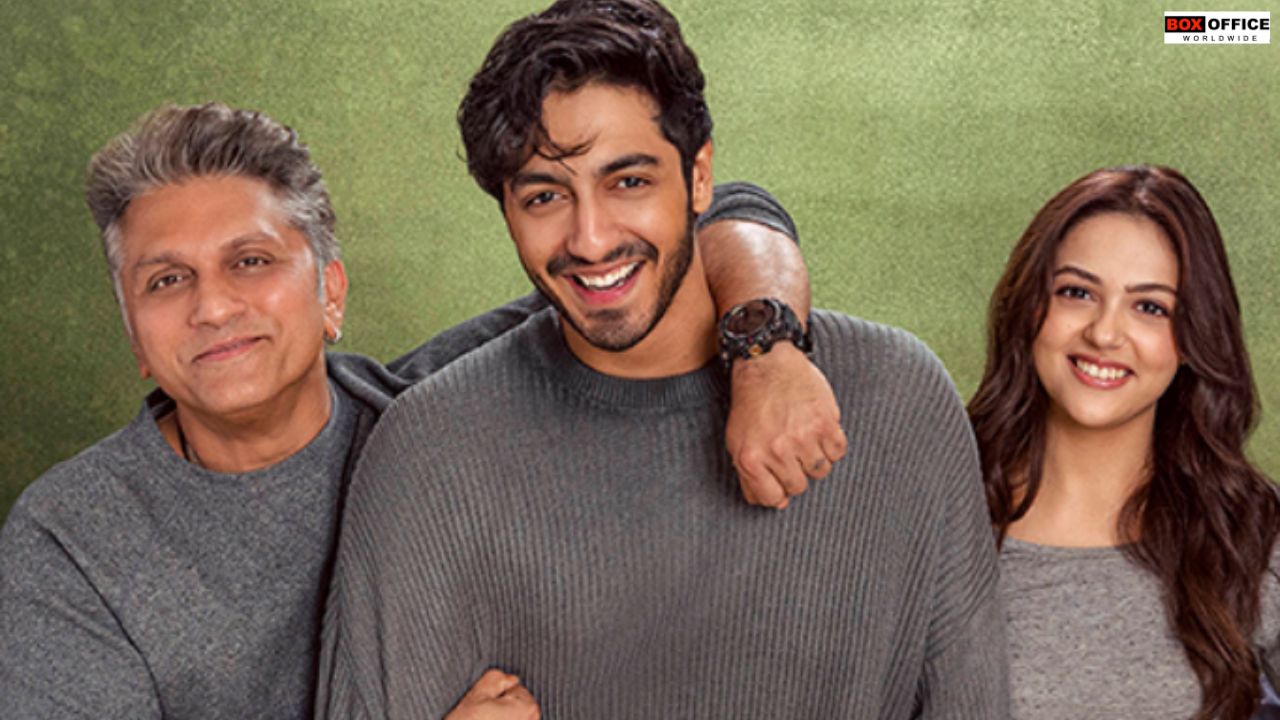



Kaali Kheti is a Hindi horror film directed by Haris in his feature debut, with Jackie Shroff and Sharad Kelkar leading the cast alongside Neha Sargam and Spandan Sameer Javalagi. Positioned as a rural horror drama, the film builds its world through an eerie village setting and places strong emphasis on atmosphere, visual design, and sound. With a story centered on family, land, and generational unrest, Kaali Kheti brings together a seasoned cast and a young filmmaker attempting to give the genre a darker and more rooted identity.
Kaali Kheti: Plot
Rohit (Sharad Kelkar) lives with Radha (Neha Sargam) and their son Raju (Spandan Sameer Javalagi) on an isolated farm where everyday life is shaped by hard labour and distance from the outside world. Their routine is disrupted when unusual incidents begin taking place around the house and the fields. The disturbances grow severe enough to unsettle the entire family, and Rohit, unable to contain the situation alone, asks his father Kishan (Jackie Shroff) to come to the village and help him understand what is happening.
Kishan (Jackie Shroff) returns as a man familiar with farming, local memory, and the history of the area. Soon after arriving, he notices that the fear gripping Rohit’s household is not confined to their home. The village carries its own uneasy silences, and Kishan begins speaking to people who seem reluctant to discuss the past openly. Through these interactions, he discovers that several villagers from his own generation disappeared under troubling circumstances, and those disappearances appear linked to the same land Rohit is now working.
Rohit’s (Sharad Kelkar) approach to farming also becomes part of the unfolding situation. His modern, unconventional methods have altered the way the land is being used, and those decisions place him in direct conflict with both local suspicion and the strange events spreading across the farm. As Kishan looks deeper into the matter, the family finds itself increasingly cut off, with the farm turning from a place of livelihood into a zone of constant threat.
Related News
As more hidden truths begin to surface, Kishan (Jackie Shroff) connects the present danger to events buried in the village’s past. What started as a troubling situation on the farm grows into a larger struggle involving missing lives, inherited guilt, and a force that seems bound to the land itself. With Rohit (Sharad Kelkar), Radha (Neha Sargam), and Raju (Spandan Sameer Javalagi) drawn closer to the heart of the danger, the family is pushed toward a confrontation in which survival depends on understanding what the soil has carried for years.
Kaali Kheti: Performance
Jackie Shroff brings an unexpectedly vulnerable quality to Kishan, and that becomes one of the film’s strongest assets. He plays the character with the weathered stillness of a man shaped by work, memory, and regret, but he does not reduce him to a familiar patriarchal figure. There is fatigue in his presence, but also alertness, pain, and a quiet determination that gives the role real dramatic texture. It is the kind of performance that keeps revealing fresh shades as the film moves deeper into its horror. Jackie Shroff does not perform fear loudly here. He internalises it, allowing dread to settle into the body, the eyes, and the pauses between words.
Related News


Sharad Kelkar is notably restrained as Rohit, and that restraint works in the film’s favour. He avoids broad melodrama and instead plays the character as a man under pressure from responsibilities he can neither fully control nor fully explain. His scenes with Jackie Shroff are especially effective because they are charged not only by immediate danger but also by generational friction. Sharad Kelkar makes Rohit more than a standard horror protagonist by suggesting anxiety, stubbornness, guilt, and desperation in equal measure.
Neha Sargam lends Radha emotional steadiness and necessary warmth within the mounting darkness. She helps ground the domestic stakes of the story, ensuring that the horror never feels detached from the family unit at its centre. Spandan Sameer Javalagi, as young Raju, contributes to the film’s fragile atmosphere simply through the vulnerability his character represents. The supporting cast supports the film’s mood without drawing attention away from the central father son dynamic.
Kaali Kheti: Analysis
What makes Kaali Kheti feel fresh is that it approaches horror through agricultural anxiety, family inheritance, and rural memory instead of relying solely on familiar supernatural mechanics. Haris directs the material with a confidence that is striking for a first feature. This does not play like the work of a hesitant young filmmaker testing genre boundaries. It feels controlled, visually assured, and committed to atmosphere. Haris understands that the most effective horror often comes from place, and he turns the farmland into a living source of menace.
The film’s visual design is easily among its biggest strengths. The cinematography gives the landscape a haunted physicality, making open space feel as suffocating as enclosed darkness. Fields, mud paths, empty stretches, and domestic interiors are framed with a precision that creates both beauty and unease. Kaali Kheti is absolutely brilliant in terms of its visuals because it finds dread in texture, shadow, and distance. The rural setting is not treated as decorative background. It becomes the grammar of the horror.


The background score deserves special mention for understanding when to press and when to withdraw. Instead of drowning scenes in constant noise, the film uses sound to sharpen anticipation. This control makes several sequences genuinely unsettling, and in its strongest stretches the film becomes shockingly scary without resorting to cheap excess. The soundscape works closely with the editing rhythm, allowing scenes to breathe just long enough for discomfort to take root before the terror lands.
The screenplay draws strength from the way it fuses family conflict with dread rooted in land and memory. The film stands apart because it treats the rural setting as an active dramatic force rather than a backdrop for generic shocks. Haris directs with unusual assurance for a debut, and the film never loses command of its tone or visual identity. It is a sharply mounted rural chiller that trusts mood, image, and silence as much as revelation. Haris leaves a clear mark on the film, and this is a director to watch.
Kaali Kheti: Verdict
Kaali Kheti succeeds by giving rural horror a heavier emotional and visual density than the genre usually receives. Its strongest choices come from atmosphere, setting, and the decision to tie supernatural fear to family inheritance and agricultural life. Jackie Shroff gives the film its gravest emotional weight, while Sharad Kelkar complements him with a controlled performance that keeps the drama grounded.
More importantly, Haris announces himself as a filmmaker with a firm command over tone and image. The film does not revolutionise horror, but it refreshes familiar material through specificity of place and craft. That combination makes Kaali Kheti an engaging, eerie, and technically assured debut that leaves a distinct impression.
Kaali Kheti: Rating
Critics Rating: 3.5/5
Stay tuned for Movie reviews, ott reviews, latest bollywood movie reviews, box office movie reviews.