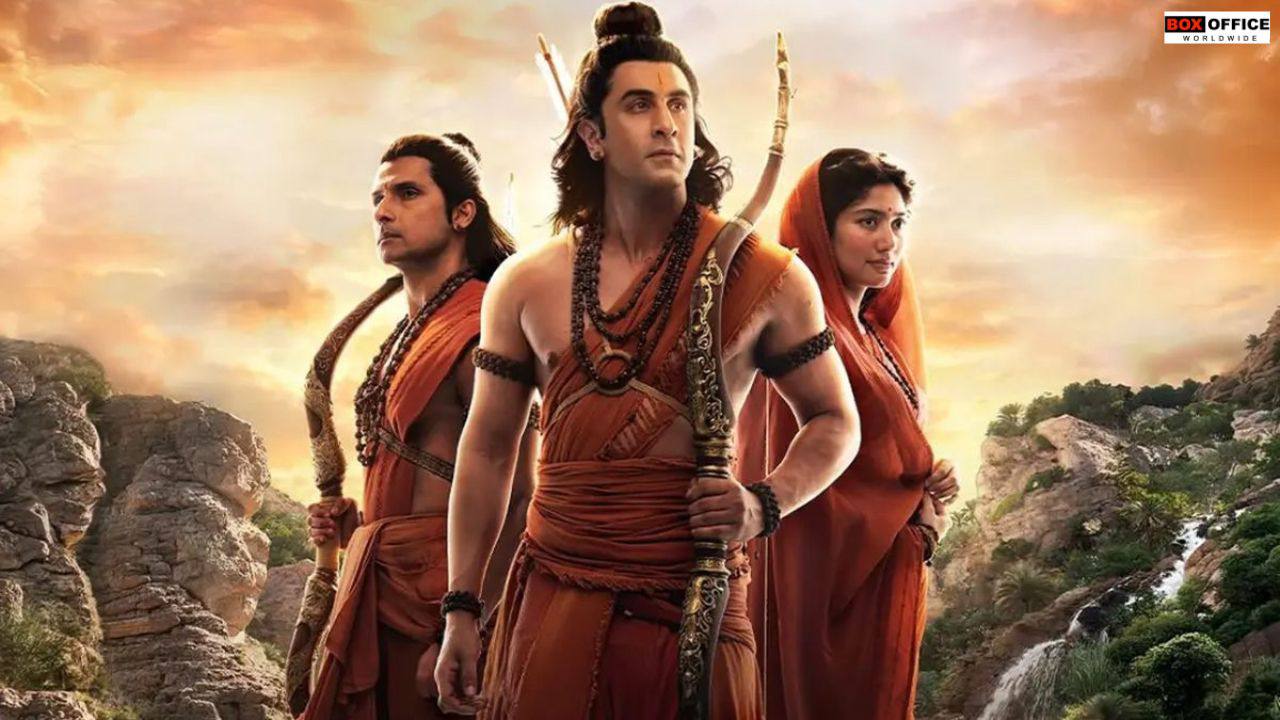



Prahaar is a Hindi courtroom drama produced by Maddock Films and directed by Avinash Arun, with Rajkummar Rao leading the cast alongside Wamiqa Gabbi. Built around the life and work of public prosecutor Ujjwal Nikam, the film places its narrative within a legal and political backdrop shaped by high profile criminal trials and the institutional pressures surrounding them. Supporting performances from Jaideep Ahlawat, Sikandar Kher, Ashish Vidyarthi, Lalit Prabhakar, and Ritvik Sahore help populate a story that moves between personal duty, public memory, and the procedural world of the courtroom.
Prahaar: Plot
Prahaar follows public prosecutor Ujjwal Nikam as he takes on cases that carry extraordinary legal and emotional consequence. The film places him at the centre of a justice system operating under intense public scrutiny, where every courtroom appearance has implications that stretch far beyond legal procedure. As the narrative moves through major investigations, hearings, and strategic legal battles, it shows the immense responsibility attached to pursuing conviction in cases that have already left a mark on the nation’s conscience.
The storyline balances the external pressure of the courtroom with the internal demands placed on the man leading the prosecution. Nikam is shown navigating not only hostile legal opposition and procedural obstacles, but also the personal cost of dedicating himself to work that leaves little room for emotional distance. The film uses this dual structure to show how public duty slowly consumes private space, turning the legal battle into something more personal and exhausting.
Wamiqa Gabbi’s character adds emotional and dramatic grounding to the story, helping the film move beyond institutional detail and into more intimate territory. Through her presence, the narrative brings in questions of support, conflict, and the emotional residue left behind by a life shaped by public duty. The supporting characters, including figures within the legal and investigative framework, help widen the world of the film and add layers to the unfolding conflict.
Related News
As the case progresses, Prahaar builds toward a series of confrontations that combine legal strategy with moral tension. The film remains focused on the movement of the case, the weight of evidence, and the challenge of securing justice in circumstances charged with political, social, and emotional significance. That commitment to the central storyline keeps the film engaging throughout and gives its courtroom drama a strong sense of momentum.
Prahaar: Performance
Rajkummar Rao is the film’s anchor and he approaches the role with measured conviction. This is not a performance built on theatrical flourishes. He understands that a character like this must command the screen through intelligence, restraint, and inner pressure rather than visible agitation in every scene. Rao gives the part a disciplined intensity. In the courtroom sequences especially, he is persuasive because he plays argument as focus, not performance. That distinction helps the character feel credible.

He also handles the emotional passages with admirable control. The film demands that he represent not only professional competence but the private exhaustion that comes with carrying symbolic responsibility. Rao communicates that fatigue without reducing the character to solemnity. He remains alert, watchful, and quietly combustible. It is one of those performances that gains force because it rarely pushes too hard.
Wamiqa Gabbi brings strong presence to the film and ensures that her role does not fade into functional support. She has an instinct for emotional clarity, and that serves her well here. In scenes that require empathy, resistance, or interpersonal friction, she gives the drama texture. Gabbi has the ability to make a scene feel lived in rather than simply plotted, and her work here adds a valuable emotional counterpoint to the central legal framework.
Special word of appreciation for child actor Dior Ranju Varghese, who delivers a stunning performance in a crucial courtroom sequence soon after the interval.
The supporting cast deepens the film’s dramatic landscape with considerable assurance. Jaideep Ahlawat, Sikandar Kher, Ashish Vidyarthi, Lalit Prabhakar, and Ritvik Sahore all contribute to the atmosphere of institutional conflict and human consequence.
Related News


Some have more substantial arcs than others, but the ensemble never feels ornamental. The film’s world depends on credibility across even smaller interactions, and the cast sustains that requirement. Collectively, they give Prahaar a seriousness of tone that suits its subject.
Prahaar: Analysis
Avinash Arun directs the material with a firm grasp of mood and rhythm. He is less interested in sensationalising the legal drama than in locating tension within process, silence, and accumulation. That directorial choice gives the film its identity. Rather than treating the courtroom as a stage for applause lines alone, he uses it as a site of controlled combat where authority, evidence, and interpretation collide. The result is a film that feels taut even in stillness. This is another impressive outing from creator of Paatal Lok.
The screenplay by Dushyant Arora, Sumit Roy, and Vishal Tiwari is strongest when it allows complexity to emerge from conflict rather than explanation. The writing is attentive to institutional structure and understands how to turn legal procedure into drama. Its flaw is clear. It becomes overly eager to underline significance through emphatic dialogue, and that impulse blunts scenes that should have trusted silence and subtext. Even then, the script’s command over progression remains notable. It keeps the narrative moving without losing sight of thematic weight.
Visually, the film is composed with sobriety and purpose. The cinematography by Avinash Arun favours controlled frames, muted tension, and an atmosphere that reflects the burden of the story. Interiors are used effectively, especially in courtroom and office spaces where pressure is created through blocking and visual compression. The camera does not chase spectacle. It observes, contains, and gradually intensifies. That visual restraint helps the film maintain tonal consistency.
Editing by Charu Shree Roy plays a crucial role in sustaining engagement. A courtroom drama can easily become repetitive if scenes begin to feel mechanically arranged, but Prahaar avoids that trap through sharp transitions and a good sense of escalation. The film does carry a few stretches where the pacing eases more than necessary, particularly when exposition returns in clusters, yet it recovers quickly because the editorial structure remains fundamentally sound.
Background of forcing emotional response, the score supports tension from underneath. This is an important choice in a film dealing with material of such historical and emotional sensitivity. There’s no scope for songs here, and one doesn’t miss them either. The background score is what matters, and it is a major plus, enhancing the tension and emotional impact at crucial junctures.
Overstatement would have weakened the impact. Thematically, Prahaar is interested in accountability, duty, public memory, and the emotional cost of representing justice within flawed institutions. Those ideas give the film substance beyond standard legal melodrama, even if the writing states them more forcefully than it interrogates them.
Prahaar: Verdict
Prahaar does not redefine the courtroom film, but it does execute its ambitions with enough command to stand apart from routine prestige drama. Its strengths are concrete: a centred Rajkummar Rao performance, a composed Wamiqa Gabbi turn, disciplined direction, and a legal narrative that understands how to generate pressure without collapsing into noise. Its slight weaknesses do not affect the films: a script that over explains and a tendency to convert feeling into statement when silence would have served better.
Yet the film’s achievements outweigh those lapses. Prahaar holds its shape, sustains its tension, and gives serious material the dramatic density it demands. This is a sturdy, forceful film that earns its emotional impact through craft rather than posturing, and that makes it worth watching.
Prahaar: Rating
Critics Rating: 4/5
Box Office Rating: 3/5
Stay tuned for Movie reviews, ott reviews, latest bollywood movie reviews, box office movie reviews.