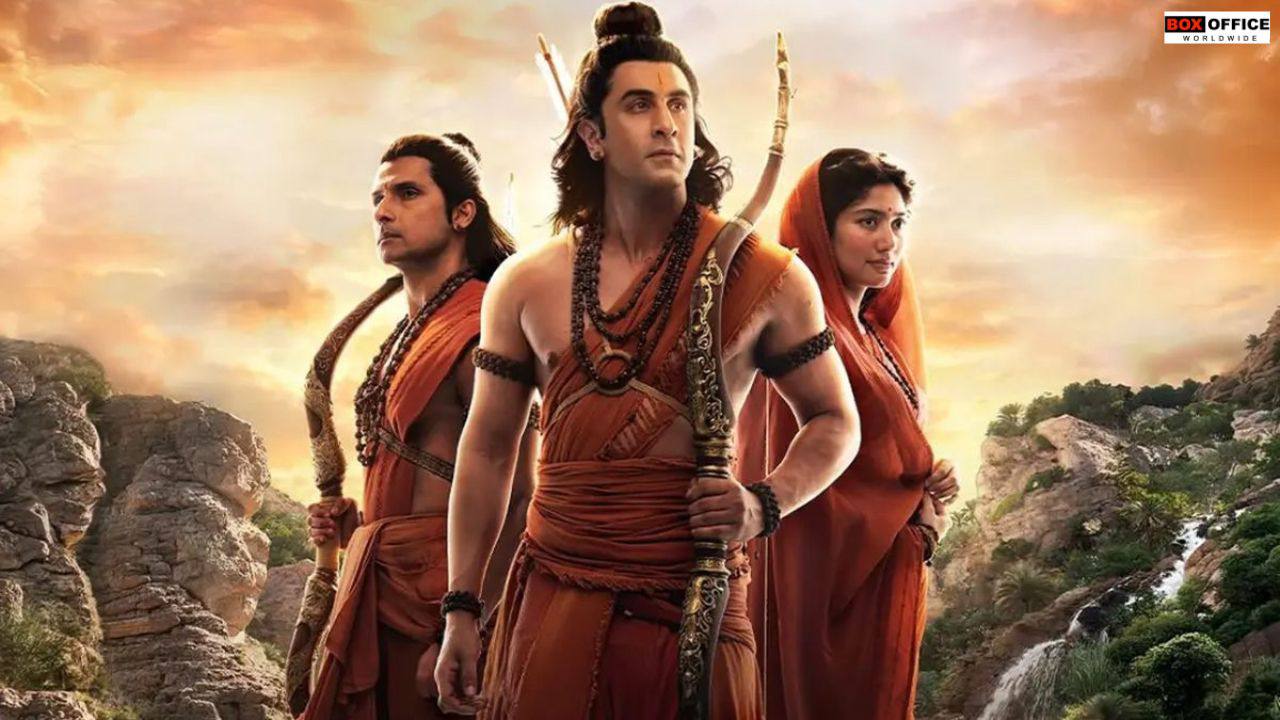



Nitesh Tiwari‘s Ramayana arrives as the first chapter of a two part mythological epic produced by Namit Malhotra, with Ranbir Kapoor as Rama, Sai Pallavi as Sita and Yash as Ravana. The ensemble includes Sunny Deol, Ravie Dubey, Arun Govil, Lara Dutta, Rakul Preet Singh, Kajal Aggarwal, Vivek Oberoi, Shobana and Anupam Kher, and the film is mounted on a scale designed for a global theatrical audience. Framed across Ayodhya, the forests of exile and the kingdom of Lanka, it adapts one of India’s most enduring sacred narratives into an event film driven by devotion, separation and war.
Ramayana: Plot
The film begins in Ayodhya, where Rama stands not merely as a prince but as the moral center of the kingdom. His life is shaped by discipline, filial duty and an instinctive compassion that makes him the natural heir to Dasharatha’s throne. The early movement of the story introduces the royal household and establishes the emotional geometry around Rama, Sita and Lakshman. The Sita Swayamvar then becomes the first major turning point, bringing Rama and Sita together in a union that gives the epic its emotional foundation.
The calm of royal order is broken when Kaikeyi’s demand alters the line of succession and sends Rama into exile. Rama accepts the command without rebellion, placing duty above power. Sita refuses to remain behind and joins him, while Lakshman follows in unwavering loyalty. Their departure from Ayodhya transforms the story from palace drama into a journey across forests, hermitages and hostile terrain, where spiritual endurance and personal sacrifice shape daily existence.
During exile, the three encounter sages, demons and omens that widen the scale of the conflict. The episode involving Shurpanakha becomes a key flashpoint, setting in motion the anger that draws Ravana into direct confrontation with Rama. What begins as a personal insult quickly expands into a larger struggle between righteousness and domination. Ravana, ruling Lanka with pride and formidable authority, responds not through negotiation but through a calculated act that strikes at Rama’s emotional core.
Related News
That act is the abduction of Sita, the central rupture of the film. Ravana carries her to Lanka, turning the exile into a mission of pursuit and rescue. Rama and Lakshman are left to follow the traces of loss across a changing landscape of allies and adversaries. Jatayu’s attempt to stop Ravana, and the cost he pays in doing so, becomes one of the film’s most moving episodes, embodying loyalty in its purest form.
As the search for Sita intensifies, the narrative shifts from intimate grief to the gathering force of war. Lanka is presented as a realm of magnificence, danger and authority, where Sita remains captive even as Ravana’s own world begins to show strain. The story steadily moves toward confrontation, drawing together duty, vengeance, brotherhood and divine purpose. The film closes this chapter at the brink of decisive battle, preserving the larger arc for the next instalment without diminishing the dramatic rise that has already taken place.
Related News

Ramayana: Performance
Ranbir Kapoor delivers a performance of notable control as Rama. He resists the temptation to play the role through grand external gestures and instead locates its force in stillness, restraint and moral certainty. That choice proves effective because it allows the character’s authority to emerge naturally rather than theatrically. Kapoor gives Rama both serenity and sorrow, and in moments of loss he lets pain register without disturbing the dignity that defines the part.
Sai Pallavi brings warmth and interior strength to Sita. She plays the role with grace but never with passivity, ensuring that Sita remains emotionally vivid even within the film’s grand formal design. Pallavi is especially effective in scenes that require tenderness under pressure, preserving Sita’s humanity while also communicating her spiritual resolve. She gives the film one of its most grounded presences.
Yash makes a commanding Ravana. He understands that the role demands not just menace but stature, and he fills the screen with a force that feels imperial rather than merely aggressive. His performance balances fury, pride and intelligence, creating an antagonist who is both magnetic and dangerous. The confrontational energy he brings gives the film much of its dramatic voltage.
Ravie Dubey contributes sincerity and devotion as Lakshman, while Sunny Deol adds imposing physical weight to his role. Arun Govil appears with a quiet dignity that deepens the royal passages, and Lara Dutta, Rakul Preet Singh, Kajal Aggarwal, Vivek Oberoi, Shobana and Anupam Kher strengthen the ensemble with focused, purposeful work. Even in a cast this large, the performances rarely feel ornamental.
Related News


Ramayana: Analysis
What separates Ramayana from many large scale mythological adaptations is the seriousness of its directorial approach. Nitesh Tiwari treats the material neither as devotional pageant nor as empty fantasy spectacle. He aims for a middle path in which emotional sincerity and blockbuster scale coexist, and for the most part he succeeds. The film’s emotional core remains visible even when the visuals expand toward monumental scale.
The screenplay is most effective when it allows the epic’s major movements to breathe. The transition from Ayodhya to exile, from exile to abduction, and from loss to war carries shape and cumulative force. At times, however, the film is so committed to solemnity that its rhythm becomes heavy. Certain passages could have used more dramatic elasticity and a looser emotional flow. Yet that same gravity also protects the material from feeling trivialised.
Technically, the film is an achievement of very high order. The production design and visual effects create a world that feels immersive rather than merely decorative. Ayodhya has ceremonial majesty, the forest stretches carry both beauty and danger, and Lanka arrives with the scale and threat required of Ravana’s domain. The action choreography is staged with unusual clarity for a film this large, and the war imagery consistently aims for impact through structure rather than chaos.
The music provides another layer of strength. A R Rahman’s songs bring devotional resonance and melodic feeling, while Hans Zimmer’s background score gives the film propulsion and scale. Together they shape a powerful sonic identity that supports both intimacy and spectacle. Ramayana clearly wants to stand beside global event cinema in technical terms, and in craft areas such as sound, design and visual construction, it comes impressively close.
Ramayana: Verdict
Ramayana is a landmark achievement because it understands that scale means very little without conviction. This film has conviction in abundance. It believes in its world, its characters and its cultural responsibility, and that belief gives the spectacle genuine weight. More importantly, it never loses sight of the emotional pain at the center of the epic, which keeps the film from becoming a museum piece or a digital showcase.
Its one clear limitation is its sustained ceremonial heaviness, which occasionally reduces dramatic fluidity. Even so, the film’s ambition, technical assurance and central performances are strong enough to overcome that flaw. Ranbir Kapoor, Sai Pallavi and Yash anchor the epic with commitment and presence, while Nitesh Tiwari shapes the material with care and seriousness. Ramayana is not simply a successful adaptation of a revered epic. It is a major statement about how Indian mythological storytelling can be translated into large format cinema without surrendering identity or feeling. This is a film that deserves the biggest screen available, and it stands as one of the most significant mainstream Indian productions of its scale and intent.
Ramayana: Rating
Critics Rating: 4.5/5
Box Office Rating: 4.5/5
Stay tuned for Movie reviews, ott reviews, latest bollywood movie reviews, box office movie reviews.